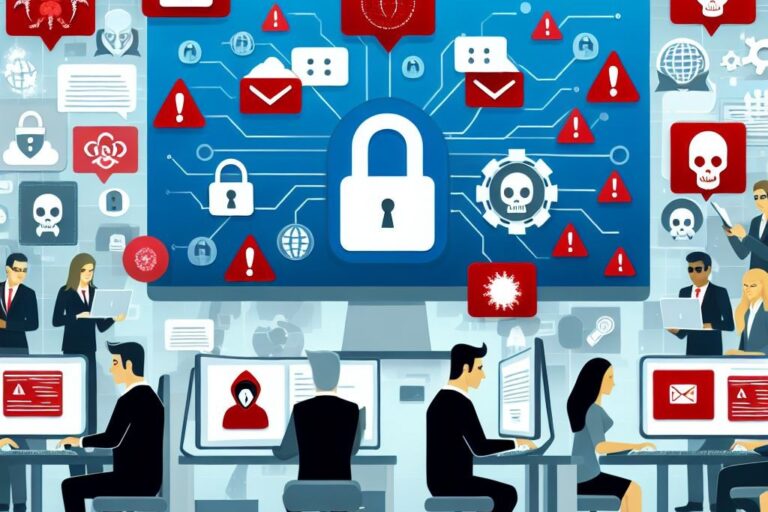
The new year has just begun and it’s a time of renewal as we plan for the possibilities to come in 2023. It’s also a time when you need to plan for resiliency in the face of ever-present cyberattacks.
The new year has just begun and it’s a time of renewal as we plan for the possibilities to come in 2023. It’s also a time when you need to plan for resiliency in the face of ever-present cyberattacks.
Sixty-eight percent of surveyed business leaders feel that cybersecurity risks are getting worse. They have a good reason. Attacks continue to get more sophisticated. They are also often perpetrated by large criminal organizations. These criminal groups treat these attacks like a business.
In 2021, the average number of global cyberattacks increased by 15.1%.
To protect your business in the coming year, it’s important to watch the attack trends. What new methods are hackers using? What types of attacks are increasing in volume? Knowing these things is important. It helps you better update your IT security to mitigate the risk of a data breach or malware infection.
We’ve pulled out the security crystal ball for the upcoming year. And we’ve researched what cybersecurity experts are expecting. Here are the attack trends that you need to watch out for.
The world has been buzzing about 5G for a few years. It is finally beginning to fulfill the promise of lightning-fast internet. As providers build out the infrastructure, you can expect this to be a high-attack area.
Hackers are looking to take advantage of the 5G hardware used for routers, mobile devices, and PCs. Anytime you have a new technology like this, it’s bound to have some code vulnerabilities. This is exactly what hackers are looking to exploit.
You can prepare by being aware of the firmware security in the devices you buy. This is especially true for those enabled for 5G. Some manufacturers will build better firmware security into their designs than others. Make sure to ask about this when purchasing new devices.
This alarming new trend is designed to get past one of the best forms of account security. Multi-factor authentication (MFA) is well-known as very effective at preventing fraudulent sign-in attempts. It can stop account takeovers even in cases where the criminal has the user’s password.
There are a few different ways that hackers try to bypass MFA. These include:
During the pandemic, the cyberattack volume increased by approximately 600%. Large criminal hacking groups have realized that world events and disasters are lucrative.
They launch phishing campaigns for world events. Attacks come for everything from the latest hurricane or typhoon to the war in Ukraine. Unsuspecting people often fall for these scams. This is because they are often distracted by the crisis.
People need to be especially mindful of scams surrounding events like these. They will often use social engineering tactics, such as sad photos, to play on the emotions.
Mobile devices go with us just about everywhere these days. This direct connection to a potential victim is not lost on cybercriminals. Look for more mobile device-based attacks, including SMS-based phishing (“smishing”).
Many people aren’t expecting to receive fake messages to their personal numbers. But cell numbers are no longer as private as they once were. Hackers can buy lists of them online. They then craft convincing fake texts that look like shipping notices or receipts. One wrong click is all it takes for an account or data breach.
Mobile malware is also on the rise. During the first few months of 2022, malware targeted to mobile devices rose by 500%. It’s important to ensure that you have good mobile
anti-malware. As well as other protections on your devices, such as a DNS filter.
These days, phishing emails are not so easy to spot. It used to be that they nearly always had spelling errors or grainy images. While some still do, most don’t.
Criminal groups elevate today’s phishing using AI and machine learning. Not only will it look identical to a real brand’s emails, but it will also come personalized. Hackers use these tactics to capture more victims. They also allow hackers to send out more targeted phishing messages in less time than in years past.
Is your business prepared for the cyber threats coming in 2022? Don’t wait to find out the hard way! Give us a call and schedule a cybersecurity check-up to stay one step ahead of the digital criminals.
You need the best IT support in London. Technology is complicated and expensive. It’s so hard to maintain everything and know what to do when something breaks or goes wrong. IT problems can put a damper on your day. They’re frustrating, time-consuming, and seem like a never-ending cycle of issues.
Penntech’s average NPS score over 90 days is 84. The average Net Promoter Score (NPS) for IT Managed Service Providers (MSPs) can vary. Still, an NPS of around 50 is considered excellent in this industry, with scores above 70 exceptional and rare.
We offer our services on a trial basis for the first three months because we’re confident in our delivery and approach.
Penntech offers a wide range of IT services, from strategic project management to 24/7 remote support, ensuring all your IT needs are always covered.
We provide advanced cybersecurity measures and expertise, including penetration testing services and Cyber Essentials, to protect clients from cyber threats.
We offer Clients the ability to scale IT services up or down based on their needs. This flexibility is crucial for businesses that experience seasonal changes or rapid growth.
Other providers often enforce their preferred IT stack, but we don’t, as IT is not a one-size-fits-all solution.
We ensure our Clients’ business continuity through robust disaster recovery and backup solutions.
With experience in various verticals and industries, Penntech understands different businesses’ unique IT challenges and can provide customised solutions..
Contact us today or explore the range of support packages on offer.

Article used with permission from The Technology Press.

Business owners often have to wear many hats, from handling HR and marketing tasks to managing the finances. One task…

Cool Windows 11 Features That May Make You Love This OS
Microsoft released the Windows 11 operating system (OS) over a year ago. It was well-received mainly with reviews as stable…

6 Ways to Prevent Misconfiguration (the Main Cause of Cloud Breaches)
Misconfiguration of cloud solutions is often overlooked when companies plan cybersecurity strategies. Cloud apps are typically quick and easy to…
4 Proven Ways to Mitigate the Costs of a Data Breach
No business wants to suffer a data breach, but unfortunately, it’s difficult to avoid them in today’s environment. Approximately 83%…
The benefits of AI include advancing our technology, improving business operations, and much more. Adoption of AI has more than doubled…
Leading Password Managers for Personal and Business
We hope that your business is already considering a password manager system, but there’s still the matter of finding the…

What’s Changing in the Cybersecurity Insurance Market?
Cybersecurity insurance is still a pretty new concept for many SMBs. It was initially introduced in the 1990s to provide coverage for large enterprises. It covered things like data processing errors and online media.
What are the advantages of implementing Conditional Access?
It seems that nearly as long as passwords have been around, they’ve been a major source of security concern. Eighty-one…

The SME Guide to Microsoft 365 Copilot
Artificial intelligence is reshaping the way businesses work—and nowhere is this more evident than in Microsoft 365. With Copilot now…

AI Attacks and the Role of Backups
Artificial intelligence (AI) is transforming cybersecurity – both for defenders and attackers. While businesses adopt AI-powered tools to strengthen protection,…

AI in Cyber Security: Friend or Foe?
Artificial Intelligence (AI) is rapidly changing the way businesses operate — including how they protect themselves from cyber threats. For…

Avoiding Costly Downtime in 2025
In today’s digital-first world, businesses rely more than ever on constant connectivity and system availability. Yet despite modern advances in…

MSP Insights: ISO 27001 in Practice
In 2025, data protection and cyber resilience remain top priorities for businesses of all sizes. ISO 27001, the international standard…

SharePoint: The Future of File Storage
For many years, traditional file servers were the backbone of business operations. They provided shared drives where employees stored documents…

As cybersecurity risks evolve, so too must the standards and frameworks designed to protect organisations. In April 2025, the National…

Managing Multi-Tenant Environments – Best Practices for 2025
As businesses adopt more cloud services and expand globally, managing multi-tenant environments has become a critical challenge for IT teams…

Why Cyber Insurance Isn’t Enough
Cyber insurance has become a popular safety net for organisations worried about the growing threat of cyber attacks. While having…